Marble Kitchen Countertops in Staten Island: The 2026 Homeowner’s Guide to Luxury
Marble has a look no other countertop material quite matches: soft, luminous, and veined in a way that makes a kitchen feel finished. It also has a reputation for being delicate. Both are true. For Staten Island homeowners considering marble, the real question is whether its character suits the way you cook and live. This guide covers how marble behaves, which varieties and finishes work best in a kitchen, how to care for it, typical market costs, and how to plan an installation that shows the stone at its best.
What Makes Marble Different
Marble is a metamorphic stone formed from limestone under heat and pressure. Its main mineral is calcite, which is softer than the minerals in granite or quartz. That chemistry explains both its beauty and its care needs.
- Appearance. Marble has depth and translucency, with veining that ranges from faint gray lines to bold, dramatic sweeps.
- Cool surface. Marble stays cool, which is why bakers have long used it for rolling dough and working with pastry.
- Heat tolerance. Marble handles warm cookware better than many manufactured surfaces, though trivets are still recommended.
- Softness. It scratches more easily than granite and can chip at edges if struck.
- Acid sensitivity. Lemon juice, vinegar, wine, tomato sauce, and some cleaners can etch marble, leaving dull spots on the surface. Sealing reduces staining but does not prevent etching.
Living With Marble: Setting Realistic Expectations
Marble will change over time. Etch marks, light scratches, and a softening of the finish around the sink and prep areas are normal. In older European kitchens, this wear is considered part of the stone’s appeal, often described as patina.
Marble is a good fit if you:
- Like a lived-in, natural look and are comfortable with gradual wear.
- Are willing to wipe spills promptly and use cutting boards.
- Want marble in a lower-traffic area, such as a baking station, a coffee bar, or a bathroom vanity.
Marble may frustrate you if you want a surface that looks exactly the same in ten years, or if your household is hard on counters. In that case, consider marble on an island or a single feature area with a more forgiving material on the main work runs.
Choosing a Marble Variety and Finish
Common kitchen marbles
- Carrara is white to light gray with soft, fine gray veining. It is the most widely used marble in kitchens and the most approachable in price.
- Calacatta has a whiter background with bolder, thicker veining, often in gray or gold tones. It is rarer and sits at the higher end of the market.
- Statuario features bright white stone with dramatic gray veining and is also considered a premium choice.
- Darker marbles, such as deep green or black varieties, create a dramatic look but can show etching more clearly.
Polished versus honed
A polished finish is glossy and slightly more stain resistant, but etch marks show as dull spots against the shine. A honed finish is matte, so etching blends in and is less noticeable. For most kitchens, honed marble is the more practical choice.
Designing a Marble Kitchen
Marble works best when the rest of the kitchen supports it rather than competes with it.
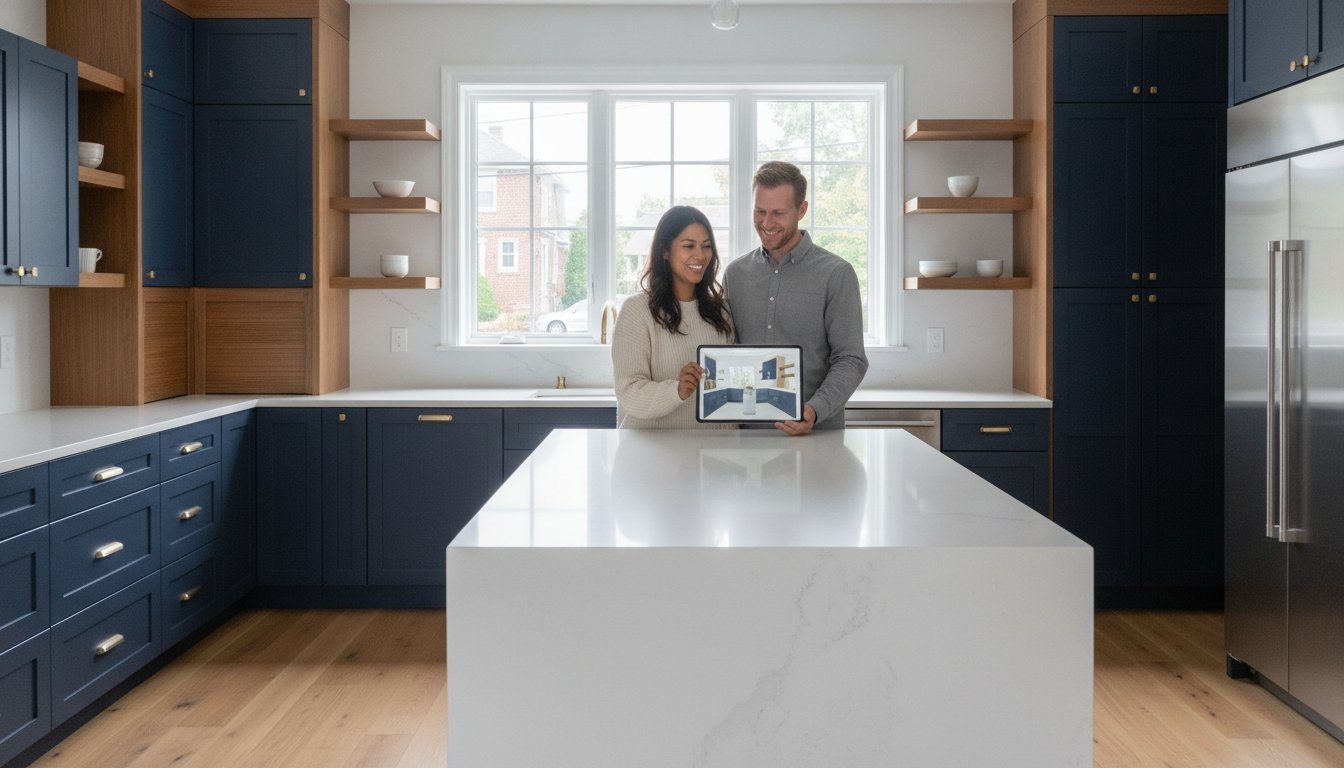
- Cabinets: white, cream, soft gray, navy, and deep green cabinets all pair well with white marble. Simple Shaker or slab doors keep the focus on the stone.
- Veining layout: on an island or long run, the direction and placement of veins matter. Ask to plan the layout on the actual slab so the strongest movement lands where you will see it.
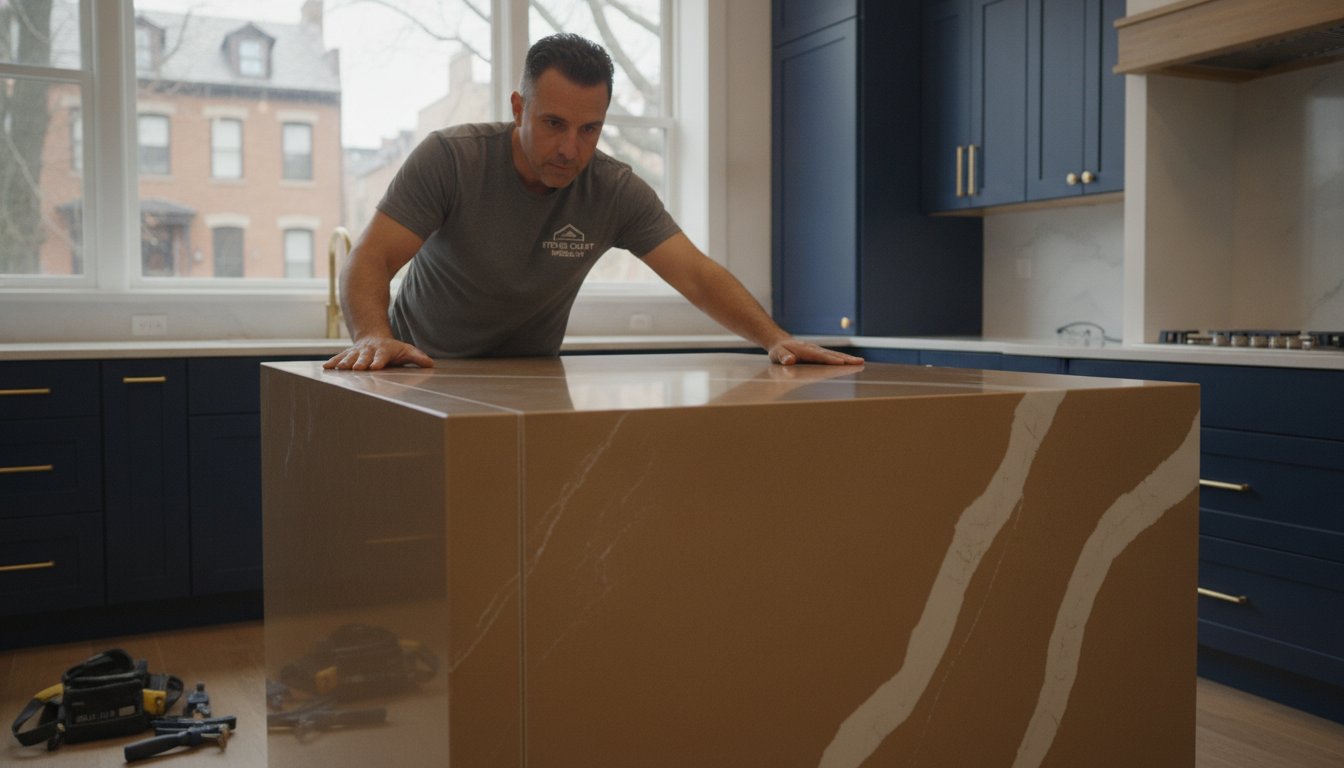
- Bookmatching: for a backsplash or waterfall island, bookmatched slabs mirror each other at the seam for a striking, symmetrical effect.
- Edges: eased and slightly rounded edges resist chipping better than sharp square ones.
- Thickness: 3 cm marble is common in kitchens. Thinner slabs may need extra support.
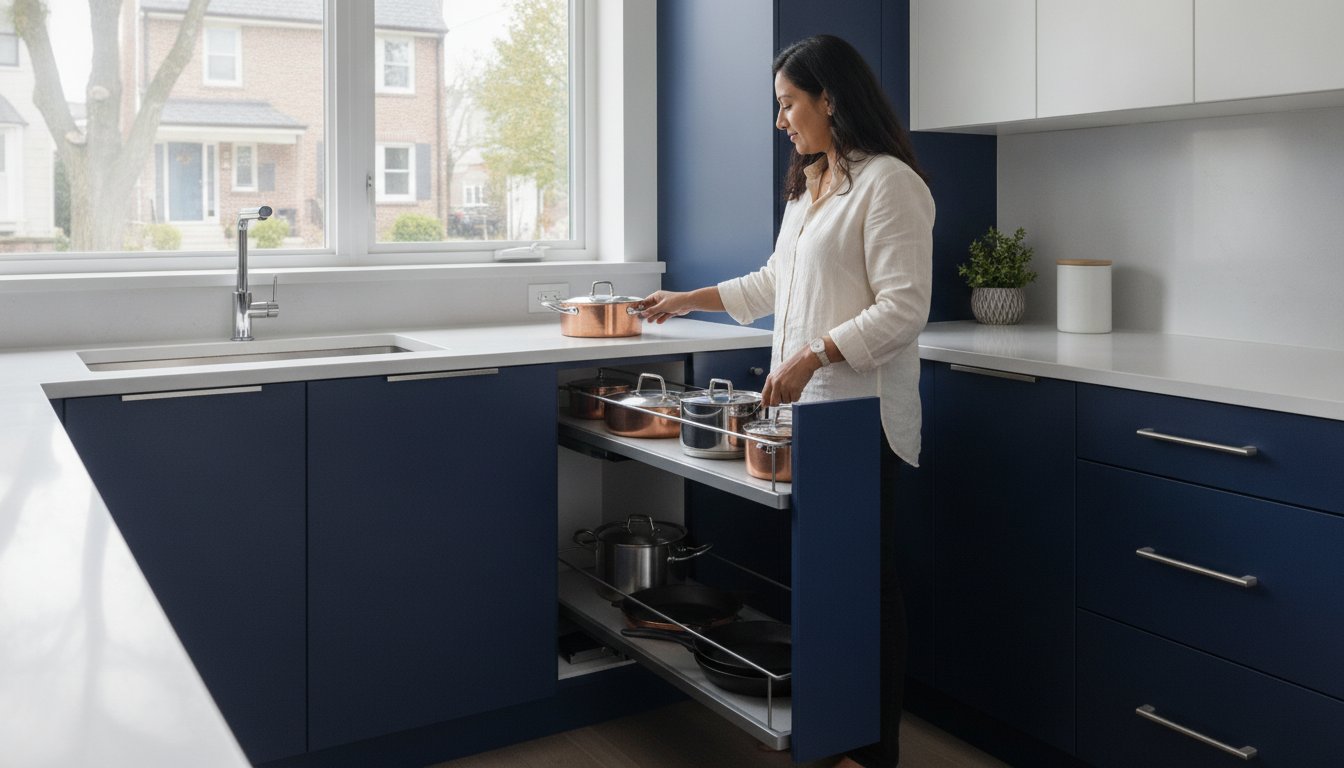
Because marble is heavy and unforgiving of uneven surfaces, the cabinets beneath it must be level and solid. This is one reason many homeowners replace cabinets and countertops together during a full kitchen remodel. You can preview cabinet colors against light stone in the kitchen visualizer.
Typical Market Costs
Marble pricing varies widely by variety, slab quality, thickness, edge profile, cutouts, and installation complexity. As a broad typical market range, installed Carrara often lands in a similar range to mid-level granite, while Calacatta and Statuario can cost considerably more per square foot. These are general industry figures that vary by project and are not NY Cabinets’ prices. A measured, itemized estimate is the best way to understand your cost.
Caring for Marble Countertops
- Seal marble after installation and reseal periodically, typically every several months to a year depending on use.
- Wipe acidic spills immediately and blot rather than spread them.
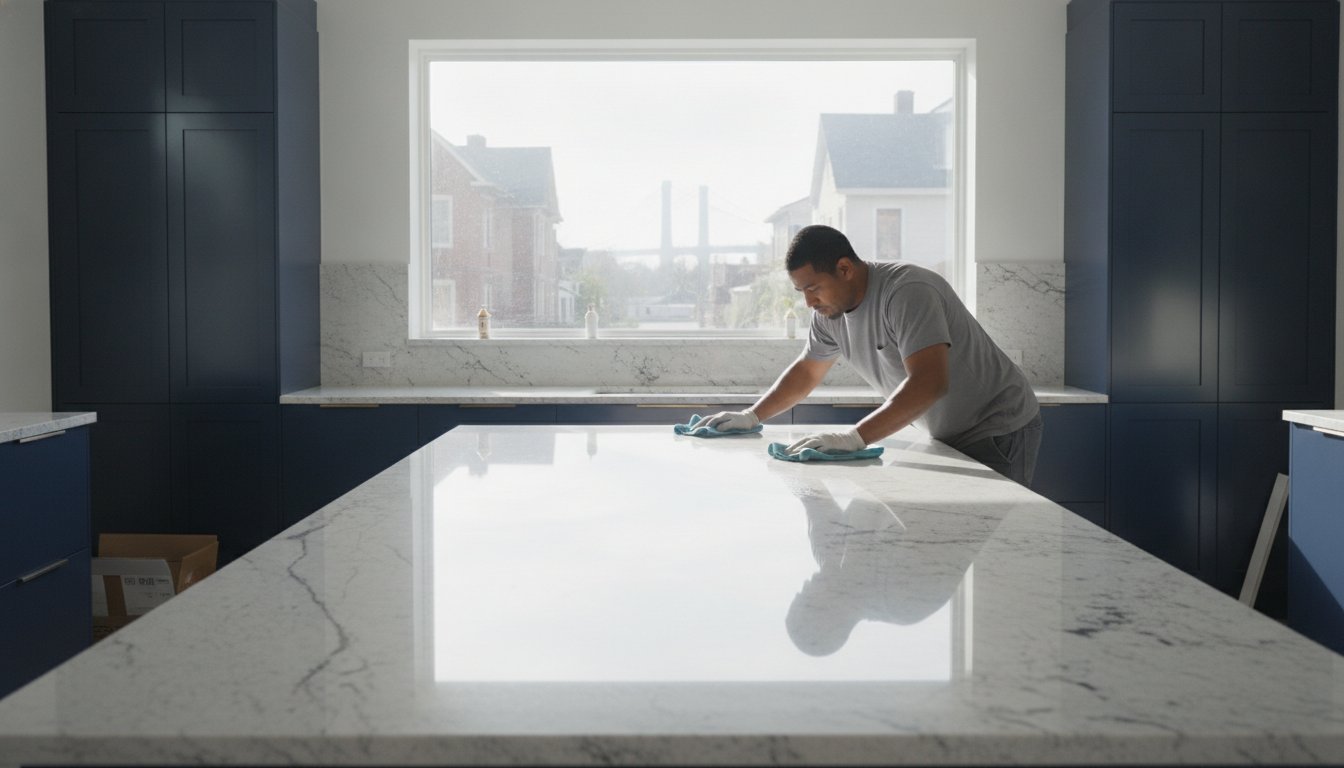
- Clean with a pH-neutral stone cleaner or mild soap and warm water.
- Never use vinegar, lemon-based cleaners, bleach, or abrasive pads.
- Use coasters under glasses and cutting boards for all prep.
- For deeper etching, a stone professional can re-hone or polish the surface.
Marble in Co-ops, Condos, and Older Homes
If you live in a co-op or condo in Staten Island or elsewhere in the city, check with building management about delivery rules, elevator access, and approved work hours. Large slabs may need to be planned with seams if access is tight. In older homes, floors and walls may be out of level, which makes accurate templating especially important. NY Cabinets handles templating and fabrication, so measurements are taken after the cabinets are set. Ask the team about marble and other countertop options for your project.
Frequently Asked Questions
Can marble stains be removed?
Many stains can be lifted with a stone poultice. Etching is different; it is surface damage that may need re-honing or polishing.
Is marble a good choice for a bathroom?
Yes. Bathroom vanities see less acidic food and less heavy use, which makes marble easier to maintain.
Does sealing make marble stain-proof?
No. Sealing slows absorption and gives you time to clean spills, but it does not prevent etching from acids.
If marble is on your list, book a free estimate or visit the NY Cabinets showroom at 236 Richmond Valley Rd., Staten Island, NY 10309. Call (347) 215-2719 to plan cabinets, templating, and countertops for a kitchen built to last.