Quartz Countertops: The Ultimate 2026 Guide for Staten Island Homeowners
Quartz has become one of the most requested countertop materials in Staten Island kitchens. It offers the look of natural stone with consistent color, very little maintenance, and strong resistance to stains. It is not the right fit for every kitchen, though. This guide explains what quartz is, how it compares to granite and marble, how to choose a color and finish, what it typically costs in the market, and how to care for it.
What Quartz Countertops Are
Quartz countertops are engineered surfaces. Manufacturers combine crushed natural quartz, which makes up the large majority of the slab, with resins and pigments, then press and cure the mixture into slabs. The result is a hard, non-porous surface with color and pattern controlled at the factory.
Quartz is different from quartzite. Quartzite is a natural stone, quarried like granite and marble, with its own care needs. If you are shopping for counters, make sure you and your fabricator are talking about the same material.
Pros and Cons of Quartz
Advantages
- Non-porous. Quartz does not need sealing and resists stains from coffee, wine, and oil.
- Consistent appearance. Slabs match closely, which makes seams easier to blend and color selection more predictable.
- Durable. Quartz resists scratches and chips in everyday use.
- Wide design range. Colors range from solid whites and grays to patterns that imitate marble veining.
- Easy to clean. Warm water and mild soap handle most daily cleaning.
Limitations
- Heat sensitivity. The resins in quartz can discolor or crack under direct high heat. Always use trivets for hot pans.
- Sunlight. Strong, direct UV exposure can cause some quartz to fade or yellow over time, which matters for outdoor kitchens or counters under large, sunny windows.
- Less natural variation. Some homeowners find even the best marble-look quartz less dramatic than real stone.
- Repairs. Chips can be filled, but repairs may be visible on solid or light colors.
Quartz Compared to Granite and Marble
- Maintenance: quartz needs no sealing; granite needs periodic sealing; marble needs sealing and careful handling of acids.
- Heat: granite handles heat best, marble is reasonably tolerant, and quartz needs the most caution.
- Stains and etching: quartz resists both; granite resists most; marble etches from acidic foods and cleaners.
- Look: granite and marble offer one-of-a-kind natural patterns; quartz offers consistency and a cleaner, more uniform look.
For busy households, rental properties, and families who want a bright white kitchen without the upkeep of marble, quartz is often the most practical choice.
Choosing Color, Finish, and Edge
Color and pattern
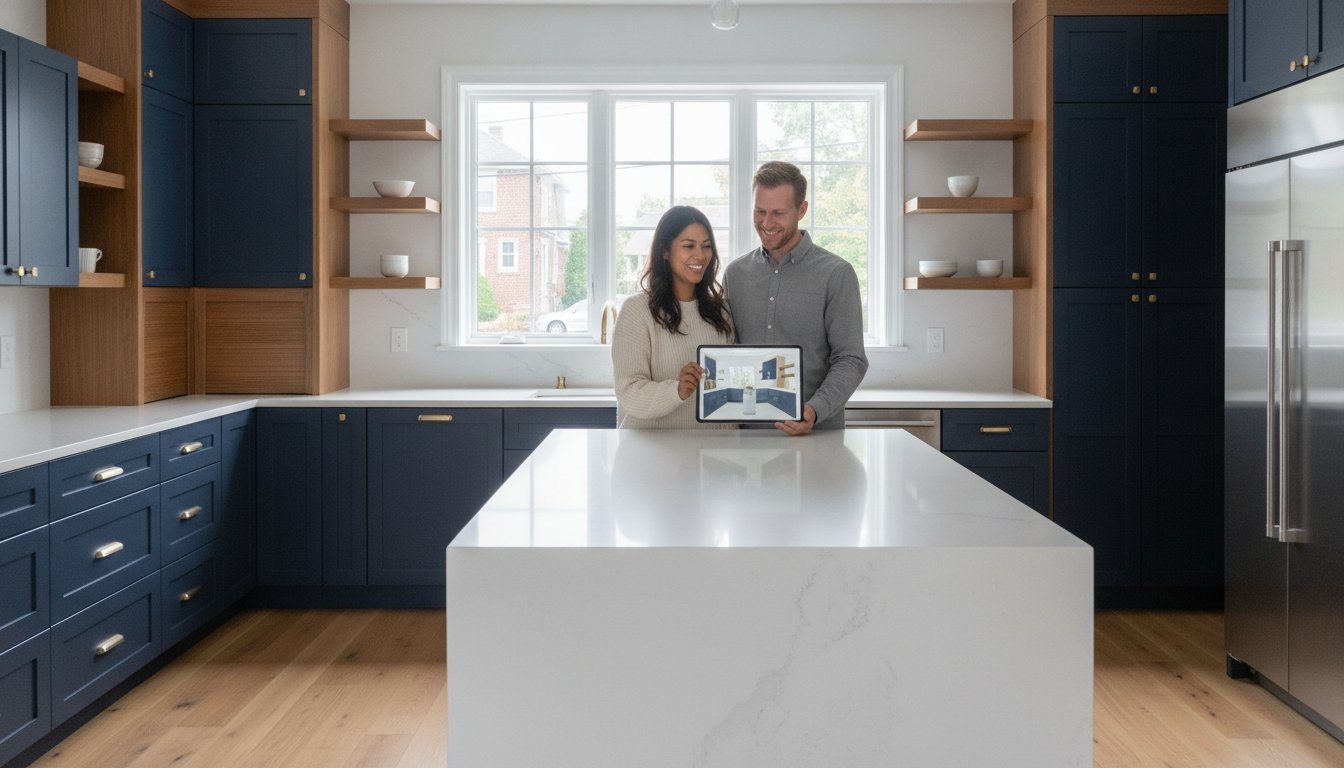
White and light gray quartz brighten small kitchens, which is helpful in many Staten Island homes with limited natural light. Marble-look quartz pairs well with white, gray, and navy cabinets. Warmer beige and cream tones suit wood cabinets and traditional homes. If you choose a veined pattern, ask how the veins will align across seams and on mitered edges.
Finish
Polished quartz is the easiest to clean and reflects light. Matte or honed quartz has a softer look but can show fingerprints and marks from metal utensils more readily, so it may need slightly more cleaning.
Thickness and edges
3 cm quartz is standard for kitchens and allows for modest overhangs without additional support. Eased and slightly rounded edges are the most durable. A mitered edge can make a slab appear thicker, which is popular on islands and waterfall ends.
Planning Your Quartz Installation
- Cabinets first: cabinets must be level and fully installed before templating. New cabinets and new quartz together avoid fit problems.
- Know your fixtures: choose your sink, faucet, and cooktop before templating so the cutouts are exact.
- Seams: most quartz slabs are large, but L-shaped and long runs may still need seams. Ask where they will go.
- Overhangs: seating overhangs of more than about 10 inches typically need brackets or supports.
- Access: in co-ops, condos, and some older homes, confirm that slabs can fit through doorways, stairs, and elevators.
NY Cabinets handles templating and fabrication as part of its kitchen remodeling projects, so the countertop is measured against the cabinets that are actually installed. Ask the team about quartz and other countertop options, and use the kitchen visualizer to see how different cabinet colors work with light or dark countertops.
Typical Market Costs
Quartz pricing depends on the manufacturer, color, pattern complexity, thickness, edge profile, cutouts, and installation. As a broad typical market range, installed quartz in the New York area often falls in a similar range to mid-level granite, with designer marble-look patterns at the higher end. These are general industry figures that vary by project and are not NY Cabinets’ prices. A measured estimate will give you an accurate number for your kitchen.
Caring for Quartz
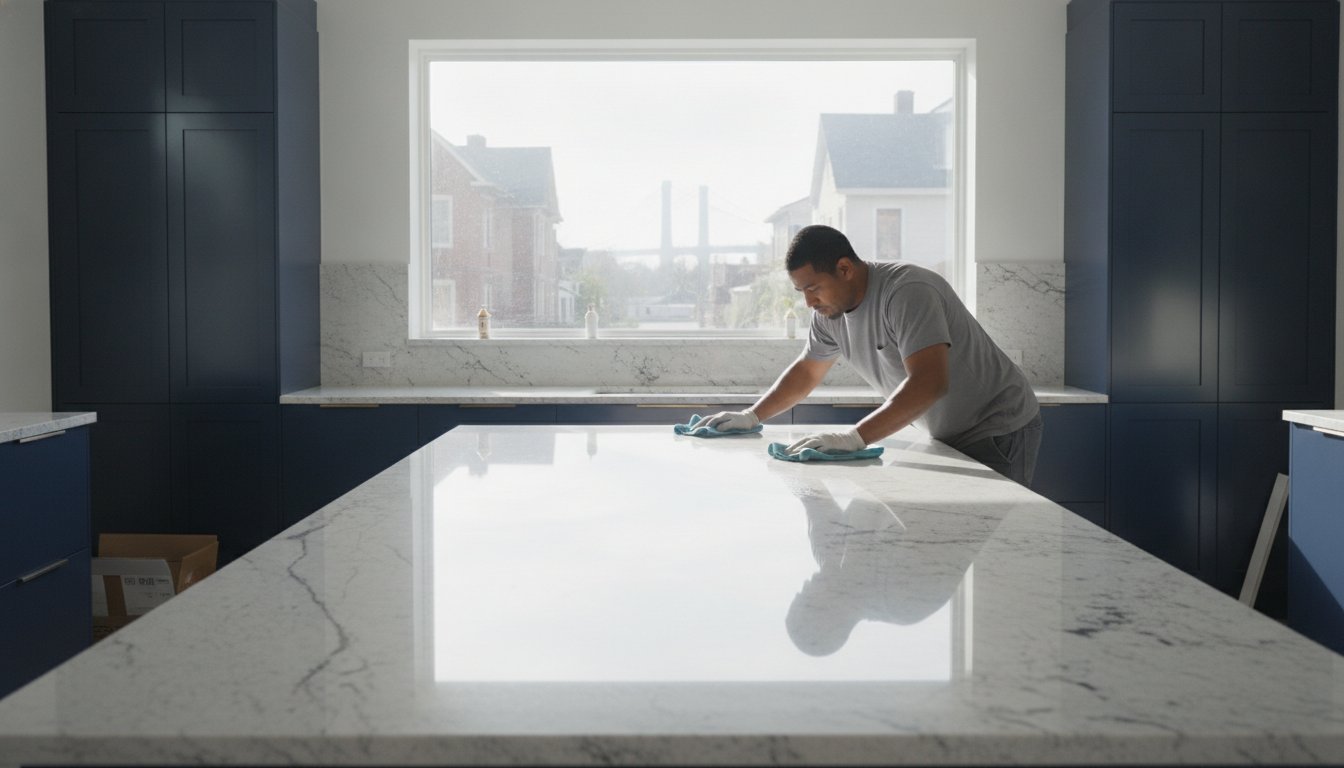
- Clean daily with warm water, mild dish soap, and a soft cloth.
- Avoid harsh chemicals such as oven cleaner, bleach in strong concentrations, and paint strippers.
- Do not use abrasive pads or scouring powders.
- Always use trivets under hot pots, pans, and countertop appliances that run hot.
- Use cutting boards to protect the surface and your knives.
Frequently Asked Questions
Does quartz need to be sealed?
No. Quartz is non-porous and does not require sealing.
Can quartz be used in a bathroom?
Yes. Quartz is a strong choice for bathroom vanities because it resists water, cosmetics, and staining.
Is quartz better than granite?
Neither is better in every case. Quartz is easier to maintain and more consistent; granite handles heat better and offers natural variation. The right choice depends on how you use your kitchen.
If quartz is on your list, schedule a free estimate or visit the NY Cabinets showroom at 236 Richmond Valley Rd., Staten Island, NY 10309. Call (347) 215-2719 to plan cabinets and countertops together with a team that has been installing custom cabinets since 1990.